Open Friends of Madison Park's calendar this month and the entries sit in a tidy row. Art Walk, September 18. A workshop called Chief of Mom Life, September 19. A community meeting October 13. Party for the Park October 24. They read like any neighborhood group's fall lineup, evenly spaced, familiar shapes.
Then there's a line easy to scroll past: a meeting at Parkshore on September 30 at 7 p.m., where the neighborhood's own city council representative will take questions about zoning. Everything else on that calendar already has an ending. The Art Walk will draw a crowd to the galleries and shops along the business core, the way it does every September. The concert series will fill Pioneer Hall on schedule. The block party will close a stretch of East Madison the way it always does. The September 30 meeting is the one item where nobody in the neighborhood, including the group that organized it, knows how it turns out. That's because it isn't a tradition. It's the next move in a zoning fight that started in 2024, and this fall is when the city starts drawing the actual lines.
What Already Has an Ending
The Art Walk on September 18 runs through the same compact commercial strip that anchors the neighborhood: the grocery and wine shop, the restaurants, the wine bar. It's a known quantity, the kind of evening that happens the same way most years.
So is the Little Beats concert series at Pioneer Hall, which has run musical and dance performances for kids on the first Saturday morning of the month, October through March, for at least the past two seasons. Past lineups have included acts booked well in advance, a $25 season package, and a crowd that treats it as a fixture rather than an event to plan around.
The Halloween tradition follows the same pattern. Friends of Madison Park closes the final block of East Madison and two residential blocks of 41st Avenue E to through traffic on Halloween, clearing the streets so trick-or-treaters can move safely while local shops hand out candy. In recent years that's come with a Costumed Pup Parade meeting at the park and a photo booth run by the Madison Park Preschool Co-op at Triangle Park. Volunteers direct traffic, parked cars are let out as needed, and the bus route stays clear. It's a well-run neighborhood institution with a predictable outcome: kids get candy, the streets reopen by early evening, everyone goes home.
Party for the Park on October 24 closes out this stretch of the calendar as a fundraiser. Money raised goes back into the park and the group's operating budget. The amount will vary year to year. The purpose won't.
None of these events require a decision from the reader. They happen whether anyone shows up to argue about them or not.
The One With No Ending Yet
The September 30 meeting is different in kind, not just in subject. Madison Park is one of 30 neighborhoods across Seattle designated as a proposed "Neighborhood Center" under the city's Comprehensive Plan update, a 20-year land use roadmap the city revisits on a fixed cycle. The current round traces back to Washington's 2023 middle housing law, House Bill 1110, which required cities to allow a broader mix of housing types in areas that had mostly permitted single detached homes. Seattle's response, unveiled by Mayor Bruce Harrell in October 2024 and now called the One Seattle Plan, folds that state mandate into a citywide rezoning effort.
On December 16, 2025, the City Council passed the final version of that legislation: the Comprehensive Plan update (Council Bill 120985) and the permanent HB 1110 implementation bill (Council Bill 120993). District 3 Councilmember Joy Hollingsworth chaired the committee that shepherded both through committee and to a full council vote. That was Phase 1. It settled that Neighborhood Centers would exist and set the framework for what they'd allow.
Phase 2, now underway through 2026, is where the framework becomes a map. This phase sets the actual zoning heights, setbacks, and parcel-by-parcel boundaries for each of the 30 Neighborhood Centers, Madison Park included. The September 30 meeting at Parkshore is where Hollingsworth takes questions on exactly that process, at the point in the calendar where public comment can still shift where a line gets drawn.
What Changes on the Ground
The numbers involved are specific enough to matter block by block. Under the Neighborhood Center designation, Madison Park's commercial core could go from a height cap of roughly 30 feet on most lots to as much as 65 feet. The blocks immediately surrounding the core would step down from there.
| Area | Current height limit | Proposed under the plan |
|---|---|---|
| Historic business core | About 30 feet | Up to 65 feet |
| Surrounding blocks, west side | About 30 feet | 40 feet (Lowrise 2), multifamily |
| Surrounding blocks, east side | About 30 feet | 50 feet (Lowrise 3), multifamily |
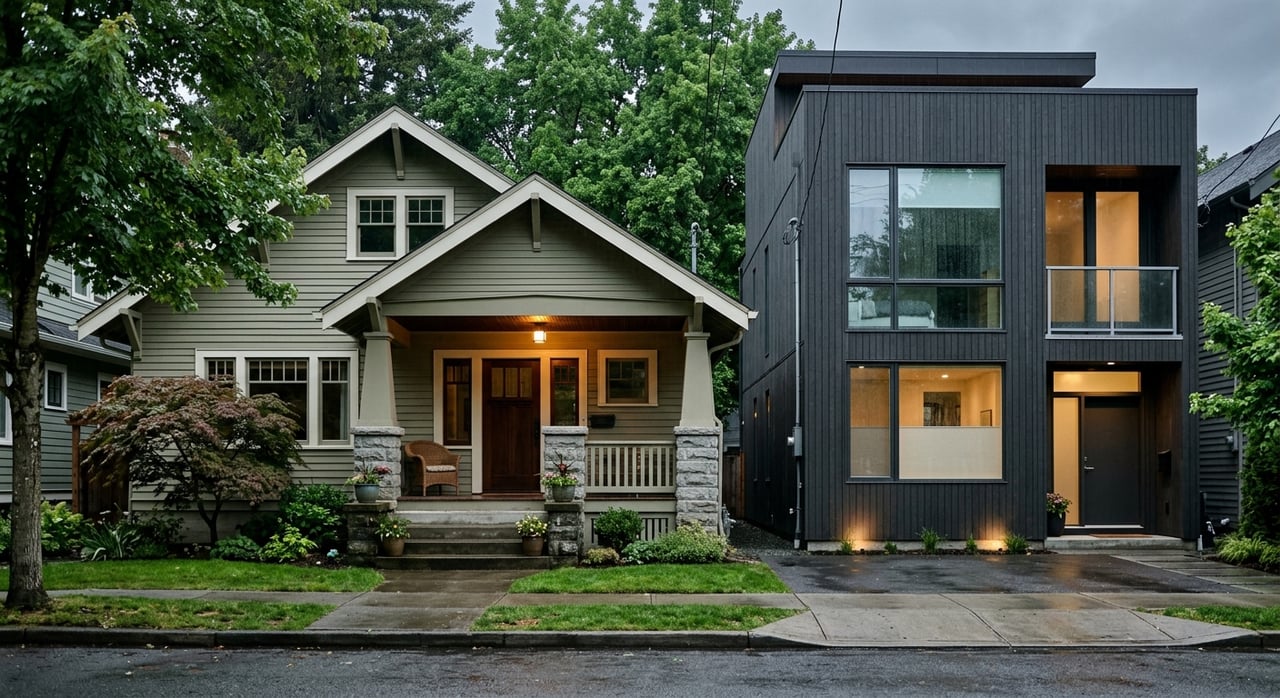
Roughly six additional blocks around the commercial core and the park itself were proposed for 5-story zoning under an earlier draft of the plan. None of this is hypothetical density theory. It's the difference between a two-story storefront and something four times taller on the same footprint, on streets residents already walk to get coffee or catch the bus.
Why the Neighborhood Group Wants the Growth Moved
Friends of Madison Park hasn't simply objected to growth arriving. In January 2025, the group filed an appeal of the plan's Environmental Impact Statement with the city's Hearing Examiner, raising concerns about the neighborhood's shoreline, stormwater and sewage capacity, tree canopy, and parking. That appeal was dismissed in March 2025 on technical grounds, alongside similar challenges from other neighborhoods.
Rather than stop there, the group proposed an alternative Neighborhood Center map in spring 2025. Their pitch: expand the designated area to include the blocks along 43rd Avenue E and the northern portion of E McGilvra, land that's already zoned for 5-story construction but hasn't been built out to that capacity. Their reasoning was that this unused zoning headroom could absorb new density without touching it, while the three attenuated blocks nearer the shoreline keep their existing 3-story limit and the historic business blocks hold at 4 stories rather than the 65-foot ceiling on the table.
That counter-proposal is what's actually sitting in front of the council as Phase 2 gets underway. The September 30 meeting is where residents get a direct answer on whether any of it stuck.
What Showing Up Actually Changes
The meeting runs from 7 p.m. at Parkshore, the lakefront tower at 1630 43rd Avenue E, a short walk from the park itself. Anyone who can't make it can send comments directly to the council office at [email protected], the same address Friends of Madison Park has used throughout this process to route neighborhood feedback into the record.
This is the one entry on the fall calendar where the outcome isn't already written. The Art Walk will happen again next September regardless of anything said at Parkshore. The zoning boundary along 43rd Avenue E might not get another public comment window before Phase 2 closes out this year.
If the zoning conversation raises questions about how it might affect a property you already own on one of these blocks, or the timing of a move you've been weighing, that's a separate conversation worth having on its own terms. Mary Lee & Associates is happy to walk through what a specific parcel's zoning status means for you. Schedule a free consultation.