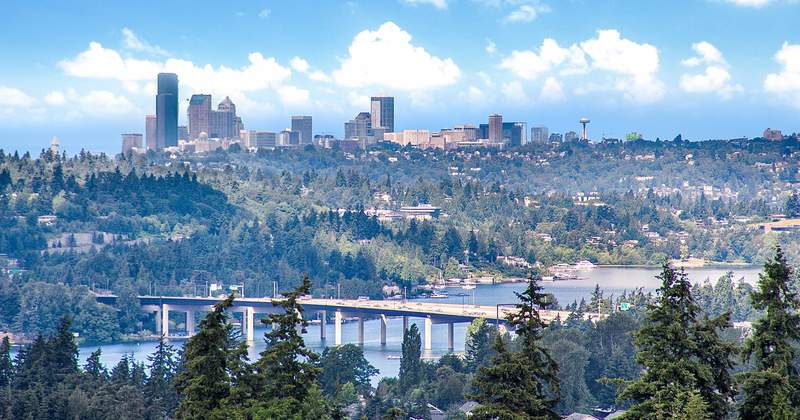
You can walk to the Fremont Sunday Market on muscle memory, right up until the week you can't, and end up standing on an emptier stretch of pavement near the Fremont Bridge wondering where everyone went. That's the built-in hazard of a neighborhood that quietly rearranges its own furniture a few times a year. The market drifts by season. The coffee shop in the old two-story Starbucks isn't serving Starbucks anymore. The ramen place on North 34th has been there so long that calling it "the old Eve spot" is starting to date you more than it dates the building. And one of the loudest rooms in Fremont on game day has been dark since February, with no announced reopening.
None of this made the front page outside the neighborhood. All of it changes what a Tuesday coffee run or a Sunday walk actually looks like if you're the one living here.
The market moves, and it isn't subtle once you notice
The market's own language gives away the mechanic: signage for the 2026 season pointed regulars from the Fremont Bridge toward North 34th Street, with opening day for the spring stretch landing on March 29. That's not a seasonal decoration change. It's a physical relocation of dozens of vendor stalls from the tighter footprint under the bridge to the longer run of 34th Street, where the market can spread out with more room for the food trucks and the indoor vintage stalls that pack into the parking garage locals call the Hyper Market.
The scale is real. The market has run in some form since 1990, and current listings put the vendor count at more than 150 makers, resellers, and food vendors on a given Sunday. A University of Washington student reporter who has walked the market for years described watching it keep growing, expanding from its bridge footprint into the North 34th Street space every summer to make room for an ever-longer vendor line.
That same piece is worth reading for reasons beyond logistics. It captures something true about how Fremont treats its own institutions: not as museum pieces to be preserved exactly as they were, but as living things that get argued over. The reporter's account of watching AI-generated art turn up in ornate frames between the vintage booths, unlabeled, isn't a complaint about the market's decline. It's a resident noticing the market is still porous enough to absorb whatever the current moment throws at it, for better and worse. Fremont has always run on that kind of "mild resistance to the obvious," and the market is where you can watch that instinct play out stall by stall.
Where the two-story Starbucks used to be
If your mental map still has a Starbucks anchoring the middle of Fremont, that map needs an update. The gigantic two-story space that store occupied is now Moment, a shop built around matcha and espresso drinks finished with flavored heavy cream, alongside a deep lineup of basque cheesecake. The building didn't change. The signage and the drink menu did, and that's a bigger shift for daily routines than it sounds. A two-story coffee shop in the center of a neighborhood is a meeting point, a place people default to without thinking, and defaults are exactly what take longest to update once the name over the door changes.
Eve's old dining room has had a new name for almost two years
Here's the correction that's easy to miss because it isn't recent. The building at 704 North 34th Street that used to house Eve has been KAYAVA since October 3, 2024, an artisan ramen shop opened under the supervision of chef Masuo Onishi, who also runs Tsurumen Davis in Japan and in Boston. That's nearly two years of service under a different name in a building a lot of longtime Fremont residents still describe by its old tenant out of habit.
This is the quieter version of neighborhood drift. Nobody's mental map gets corrected by a single dramatic event. It just slowly stops matching reality, one storefront at a time, until you catch yourself giving someone directions to a restaurant that closed before some of your neighbors moved in.
The one ritual that's paused, not gone
The most unresolved thread in Fremont right now involves Petoskey's, the Midwest-themed sports bar on North 36th Street that's been a gathering point for Minnesota Vikings fans, Seattle Kraken watch parties, and Super Bowl crowds since it opened in 2018. An early-morning fire on February 4, 2026 started in a crawl space beneath the building. Seattle Fire got the blaze under control in about 20 minutes, and no one was hurt, but the damage extended into the kitchen area at the back of the building, forcing the bar to close just days before that year's Super Bowl.
Owner Joel Radin later put the damage at roughly $150,000, concentrated in the kitchen structure, and launched a GoFundMe to help cover repairs. As of February 27, that campaign had raised $7,417 toward a $50,000 goal from 85 donors, and Radin was candid about the wait.
"Where we are now is just a drag. We're in limbo," Radin told FOX 13 Seattle.
Reporting from MyBallard at the time noted the restoration was expected to take several months, with no firm reopening date set. Nothing in local coverage since has pinned down a reopening. If you're planning a game-day gathering and Petoskey's is part of the plan, it's worth confirming their current status before you show up expecting the usual seven screens and a Kraken-themed cocktail menu.
Why any of this matters if you already live here
None of these four things happened in a single dramatic week. That's exactly the point. Fremont doesn't post a press release when it changes. The market shifts a block or two with the season. A coffee shop's name changes over a long weekend. A restaurant's identity turns over so slowly that half the neighborhood is still calling it by its old name two years later. A fire closes a bar in February and the wait to reopen keeps stretching past the point anyone gave it a firm end date.
Keeping up with all of it isn't a chore. It's what neighborhood fluency actually looks like here, more than any static list of "best of Fremont" spots could capture. The version of Fremont you knew a year ago is close to the version that exists now, but not identical, and the gap between those two versions is where a lot of good conversation with your neighbors tends to start.
If you're the kind of person who tracks these shifts because you genuinely care where you live, and you've ever wondered what that same attentiveness would tell you about the market for the house you're in or the one you've been eyeing two streets over, that's a conversation Mary Lee & Associates has been having with Eastside and Seattle homeowners for a long time. Schedule a free consultation whenever you're ready to talk specifics.