How many bedrooms does your house actually have?
If you own a home in Bridle Trails, the honest answer might not be the number on your floor plan. It might be the number written on a septic permit filed decades ago, before anyone finished the space above the barn or turned the old tack room into a fourth bedroom. In King County, that permit outranks your tape measure. A five-bedroom estate with a three-bedroom septic rating gets marketed, searched, and filtered as a three-bedroom home, full stop.
This is the part of selling an equestrian property that rarely makes it into a general Eastside prep checklist, because most Eastside homes sit on public sewer and never have to think about it. Bridle Trails is different. The same large lots, working pastures, and pre-1980s construction that make this neighborhood one of the only places on the Eastside where horse-keeping is still a daily reality also mean a disproportionate share of its housing stock runs on private septic and well systems designed for a smaller version of the house that exists today.
The Form That Outranks Your Floor Plan
Washington's Seller Disclosure Act, RCW 64.06, requires you to disclose what you know about your septic system's condition. King County goes a step further. Before title can transfer, the county requires an inspection by a licensed On-Site System Maintainer, and the seller must record a Notice of On-site Sewage System Operation and Maintenance Requirements, known on the Northwest Multiple Listing Service as Form 22U, at the King County Recorder's Office before closing. If that notice is already recorded on the title from a prior sale, you're done. If it isn't, the seller has to record it and hand a copy to the buyer.
Layered on top of that is a listing rule that has nothing to do with disclosure law and everything to do with how buyers search. The bedroom count on an NWMLS listing has to match the approved capacity of the septic system, not the number of rooms with closets and doors. A home built to a three-bedroom septic design that later gained a fourth bedroom through a remodel or a finished bonus space still lists as three bedrooms, with the extra room marketed as a den, office, or flex space. Buyers filtering their search for "4+ bedrooms" never see the listing at all.
Why This Hits Harder Here Than Almost Anywhere Else on the Eastside
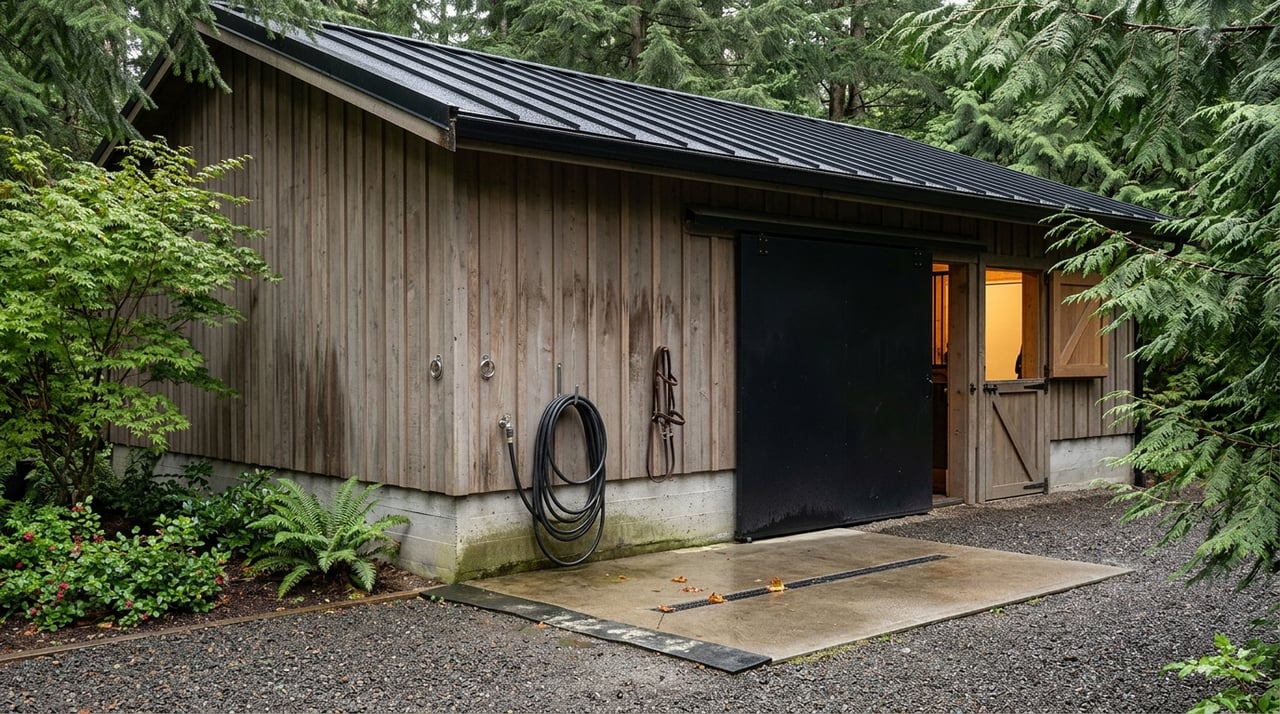
Bridle Trails' housing stock is unusually wide for a single neighborhood. Inventory has ranged from smaller condos near the Microsoft campus up to full equestrian estates well north of $7 million, and that spread exists because the neighborhood mixes several distinct eras of construction: mid-century ramblers from the 1950s through the 1970s, custom estate homes on half-acre to two-acre lots, and a steady run of teardown-rebuild activity producing contemporary construction on the same equestrian-zoned parcels. Many of the barns on these properties carry two to six stalls, tack rooms, and increasingly, finished loft space that owners use as guest quarters, offices, or additional bedrooms.
That loft space is exactly where the septic math breaks down. A septic system permitted decades ago for a modest rambler was never designed with a barn apartment in mind. When that space gets finished years later, whether by the current owner or two owners back, it often happens without anyone updating the septic capacity on file with the county. Nobody notices until a seller orders the pre-listing inspection and gets back a rating that doesn't match the house.
Gated enclaves like Flying Horseshoe and pockets like Bridlewood Circle, right off the park's own access road, carry some of the highest per-acre values in the neighborhood precisely because of the combination of privacy, trail access, and working horse facilities. That same combination is what makes the septic and well questions worth solving early instead of during a buyer's due diligence period.
The Well Setback Problem Nobody Mentions Until the Inspection
Washington's well construction rules, laid out in WAC 173-160-171, require a septic drainfield to sit at least 100 feet from a private drinking water well, with the septic tank itself required to stay at least 50 feet away. Those numbers are the same across the state. What changes on a horse property is what sits inside that buffer zone.
Extension guidance for horse owners recommends keeping livestock and manure storage at least 100 feet from any wellhead, for the simple reason that manure-contaminated runoff can reach groundwater faster than most owners expect. On a suburban half-acre lot, that guidance is easy to follow because there's nowhere for a horse to graze close to a well in the first place. On a Bridle Trails property with an active pasture, a well that was sited before anyone thought about setback distances, and fencing that was installed to make the most of a irregular lot, the buffer zone question can be a genuine surprise. It's not something most sellers think to check until a buyer's inspector walks the property line with a tape measure.
| Setback | Minimum distance |
|---|---|
| Well to septic drainfield | 100 feet |
| Well to septic tank | 50 feet |
| Manure or livestock confinement to wellhead (extension guidance) | 100 feet |
None of this means a property is unsellable. It means the fencing, pasture rotation, and well location are worth reviewing before a buyer's inspector finds a problem for you.
The Six-Month Clock Sellers Miss
King County treats a septic inspection as valid for six months. If you had your system inspected within that window, you're exempt from re-inspecting before this sale. If your last inspection is older than that, or you've never had one, it has to happen before title can transfer.
That timing matters more in Bridle Trails than in a slower market. As of July 2026, the median time on market for listings in the surrounding zip code sat at just 11 days, with well-priced homes seeing strong activity almost immediately. A market moving that fast has very little patience for a septic inspection that gets scheduled after an offer is already in hand. An OSM inspection that turns up a failing drainfield, an undersized system, or a mismatch between bedroom count and permit becomes a negotiation, an as-is disclosure, or a lost week rescheduling contractors, right when the buyer expected a fast close.
Scheduling the inspection before listing, not after accepting an offer, is the difference between fixing a problem on your own timeline and fixing it on the buyer's.
What a Pre-Listing Check Actually Buys You
A septic system that checks out clean before you list does two things at once. It protects your advertised bedroom count, which protects the pool of buyers who ever see your listing in the first place. And it takes one more unknown off the table during the inspection period, which matters in a market where buyers are competing for a limited number of large-lot, horse-friendly properties.
For sellers who find a problem during that pre-listing check, whether it's a septic repair, a well issue, or fencing that needs to move before closing, Mary Lee's Concierge Service is built for exactly this kind of pre-listing project. Repairs get handled and paid for at closing rather than out of pocket before you've sold anything, which matters when the fix involves a licensed septic contractor rather than a coat of paint.
The Neighborhood Is Paying Closer Attention Than You'd Expect
Bridle Trails isn't a neighborhood where equestrian character is incidental. The Bridle Trails Community Club has represented residents to the City of Bellevue since 1978 and is approaching its 50th year of advocacy specifically to protect the area's residential and equestrian character as growth pressure increases across the Eastside. Buyers who target this neighborhood specifically for its barns, pastures, and trail access tend to be the buyers who ask the most informed questions about whether those facilities are properly permitted and disclosed. A seller who can produce a clean, current septic report and a clear well history isn't just checking a box. They're speaking the language this particular buyer pool already knows how to ask about.
A Few Questions Worth Answering Before You List
Does every home in Bridle Trails have a septic system? No. Properties closer to the commercial corridors and near Microsoft-adjacent condo development are often on public sewer. Larger estate lots and older ramblers on the interior of the neighborhood are more likely to be on private septic, but it varies by parcel and is worth confirming through King County's septic records rather than assuming based on lot size.
My septic was inspected eighteen months ago. Do I need a new one? Yes. King County's exemption only covers inspections completed within the prior six months. Anything older needs a fresh inspection before closing.
Can I still list the finished space above my barn as a bedroom? Only if your septic system's approved capacity supports it. If it doesn't, the space can still be marketed as a bonus room, guest suite, or office, but not as a bedroom on the NWMLS listing.
If you're weighing a sale of a horse property in Bridle Trails and want a clear-eyed read on where your septic and well documentation stand before a buyer's inspector finds out first, Mary Lee & Associates offers a free consultation to walk through exactly that.